
Biblical Dream Interpretation: What Dreams Mean in the Bible
Dream of a snake and you may wake up wondering whether it was a warning. Dream of someone you have lost and the feeling can follow you around all day. Christians have been asking what dreams mean for as long as the church has existed, and they have unusually rich material to work with: the Bible mentions dreams and night visions well over a hundred times, treats some of them as messages from God, and is refreshingly relaxed about the rest. This guide covers the famous dreams of Scripture, the kinds of dreams the Bible describes, how Christians test a dream today, and what the most asked-about symbols mean when read through a biblical lens.
Do Dreams Mean Anything in Christianity?
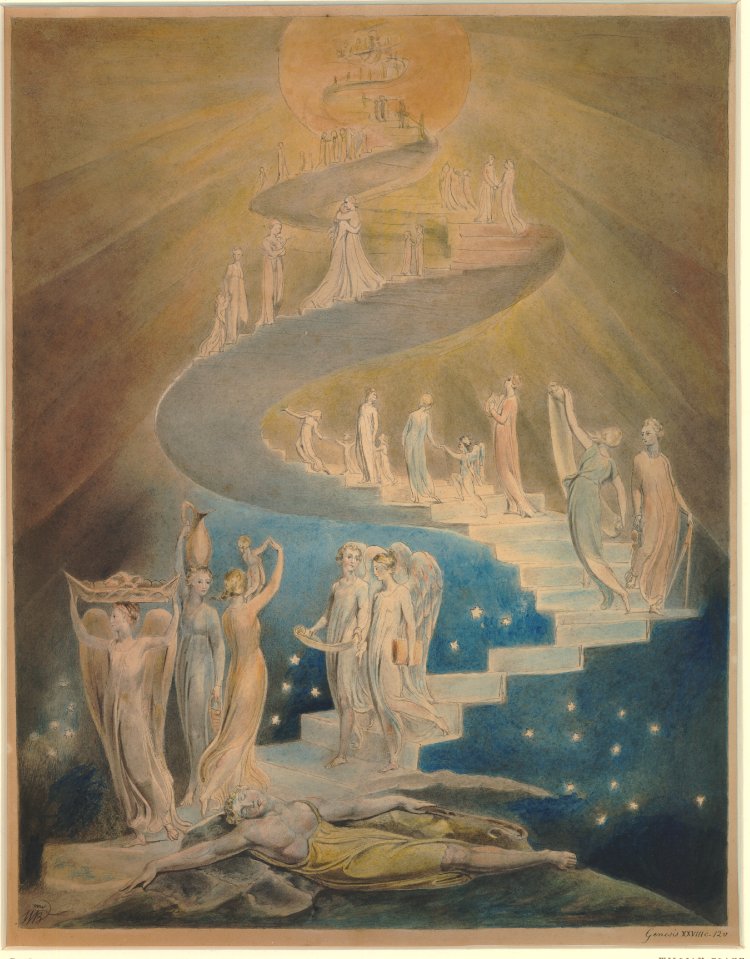
It is hard to read the Bible without noticing how much happens at night. Jacob meets God on a stairway of light. A young Joseph sees his future in bowing sheaves and stars, and centuries later another Joseph is told in his sleep to take Mary as his wife. Daniel serves in a foreign court where God unsettles kings while they sleep. The book of Job puts it plainly: ‘For God does speak, now one way, now another, though no one perceives it. In a dream, in a vision of the night, when deep sleep falls on people’ (Job 33:14-15).
Yet the same Bible refuses to turn dreams into an oracle. ‘Much dreaming and many words are meaningless,’ says Ecclesiastes 5:7, and Jeremiah had sharp words for prophets who dressed their own imagination up as revelation (Jeremiah 23:25-32). So the Christian starting point is neither superstition nor dismissal. Dreams can matter, and not every dream does. The skill the Bible actually teaches is discernment: telling the difference.
The Famous Dreams of the Bible
From Genesis to Acts, dreams arrive at turning points: before a family is saved from famine, before an empire falls, before a child is rescued from a murderous king. These are the ones every reader of biblical dreams should know.
| Dreamer | The dream | What it meant | Where in the Bible |
|---|---|---|---|
| Jacob | A stairway between earth and heaven, with angels going up and down | God renews his promise and pledges to stay with Jacob | Genesis 28:10-22 |
| Joseph | Sheaves of corn and eleven stars bowing down to him | His future rise over his brothers in Egypt | Genesis 37:5-11 |
| The cupbearer and the baker | A pressed vine and baskets of bread | Restoration for one man, judgment for the other | Genesis 40 |
| Pharaoh | Seven fat cows devoured by seven gaunt ones | Seven years of plenty, then seven of famine | Genesis 41 |
| A Midianite soldier | A barley loaf flattens the camp of Midian | Gideon’s unlikely victory | Judges 7:13-15 |
| Solomon | God appears at Gibeon and says ‘Ask for whatever you want me to give you’ | Solomon asks for a discerning heart | 1 Kings 3:5-15 |
| Nebuchadnezzar | A colossal statue of gold, silver, bronze, iron and clay | The rise and fall of empires | Daniel 2 |
| Daniel | Four great beasts rising from the sea | Kingdoms to come, and a kingdom that will never pass away | Daniel 7 |
| Joseph of Nazareth | Four dreams: take Mary as your wife, escape to Egypt, return, settle in Nazareth | Protecting Mary and the child Jesus | Matthew 1-2 |
| The Magi | A warning not to go back to Herod | The child’s life is spared | Matthew 2:12 |
| Pilate’s wife | She suffers greatly in a dream because of Jesus | A warning her husband ignores | Matthew 27:19 |
| Paul | A night vision of a man begging ‘Come over to Macedonia and help us’ | The gospel crosses into Europe | Acts 16:9-10 |
Two details are easy to miss. First, the Bible’s dreams cluster around danger and transition, moments when someone needs to know something they could not otherwise know. Second, whenever a dream needs interpreting, the credit goes to God rather than to a clever method. Joseph and Daniel, the Bible’s two great interpreters, both insist on this in almost the same words. That humility sets the tone for everything Christians have built on these stories since.
When there is a prophet among you, I, the LORD, reveal myself to them in visions, I speak to them in dreams.
Numbers 12:6
The Three Kinds of Dreams the Bible Describes
Scripture never lays out a formal classification of dreams, but across its pages three broad kinds keep appearing:
- Dreams from God: revelation, warning or encouragement, like the dreams of both Josephs, Solomon and the Magi. Sometimes God speaks plainly in them, sometimes in symbols that need interpreting, but they arrive with purpose and they hold up under testing.
- Ordinary dreams: ‘a dream comes when there are many cares’ (Ecclesiastes 5:3). Scripture is entirely comfortable saying that most dreams are simply the mind working through the day’s worries, hopes and noise.
- Deceptive dreams: Deuteronomy 13 warns that even a dreamer whose signs come true must be rejected if he leads people away from God, and Jeremiah 23 mocks the prophets crying ‘I had a dream! I had a dream!’ The test of a dream is never how vivid it was, but where it leads.
Most dreams, on the Bible’s own account, belong to the second kind. That is worth saying plainly, because it frees you from hunting for hidden messages in every scrap of sleep. The real question is not what every dream means, but how you would recognise the rare one that matters.
How Christians Discern a Dream: Six Principles
Christian teachers from the early church to today’s pastors tend to agree on a short list of tests. None of them requires a dream dictionary.
- Remember whose gift it is. In prison, Joseph asked, ‘Do not interpretations belong to God?’ (Genesis 40:8), and Daniel told the king that no wise man could explain his dream, ‘but there is a God in heaven who reveals mysteries’ (Daniel 2:28). Christians begin with prayer and humility, not a symbol lookup.
- Test it against Scripture. A dream never outranks the Bible. If a dream pushes you towards something Scripture calls wrong, the dream loses, however vivid it felt.
- Pray for wisdom. ‘If any of you lacks wisdom, you should ask God, who gives generously to all’ (James 1:5). Discernment is asked for, not assumed.
- Watch the fruit. Guidance from God tends to produce peace, clarity and courage, because ‘the Spirit God gave us does not make us timid’ (2 Timothy 1:7). Confusion, dread and compulsion are poor signs.
- Seek wise counsel. ‘Plans fail for lack of counsel, but with many advisers they succeed’ (Proverbs 15:22). A mature believer or a pastor will often see what you cannot.
- Write it down. When Daniel had his great dream, the first thing he did was write it down (Daniel 7:1). Dreams evaporate within minutes of waking, and patterns only show up across weeks of entries. A dream journal is the oldest tool in the book, quite literally.
Common Dream Symbols and Their Biblical Meaning
The Bible contains no dream dictionary, and careful Christian interpreters insist that the same image can mean different things in different lives. What Scripture does give its images is a strong flavour. Here is how the most searched symbols read when you start from the Bible rather than from folklore, with one rule to keep throughout: context first, dictionary second.
- Snakes: the serpent enters Scripture on its first pages as the deceiver (Genesis 3), so snake dreams are usually read as a prompt to look for deception, temptation or an unhealthy influence nearby. There is a twist worth knowing: a bronze snake lifted on a pole once became the instrument of Israel’s healing (Numbers 21:9), an image Jesus later applied to himself (John 3:14). Even the Bible’s darkest symbol is not beyond redeeming.
- Water: living water stands for the Spirit and renewal (John 4:10), while floods stand for being overwhelmed: ‘the waters have come up to my neck’ (Psalm 69:1). Calm water and rising water read very differently, so notice which one you saw.
- Falling: Scripture ties falling to pride and lost footing, as in ‘pride goes before destruction’ (Proverbs 16:18). Falling dreams are commonly heard as anxiety about losing control, status or security.
- Teeth falling out: honesty first: this dream appears nowhere in the Bible. Modern Christian interpreters tend to link teeth to words and confidence, the fear of being embarrassed, unheard or unable to speak up.
- Death: in Scripture, death imagery regularly marks an ending that makes room for something new: the grain of wheat must fall and die to bear fruit (John 12:24). A death dream is rarely read as a literal omen; far more often it points to the end of a season, a habit or an old identity.
- Babies and pregnancy: a promise or a beginning, something being started: ‘See, I am doing a new thing’ (Isaiah 43:19). Often connected to a project, a hope or a calling rather than a literal child.
- Flying: another dream the Bible never describes, though it does promise that those who hope in the Lord ‘will soar on wings like eagles’ (Isaiah 40:31). Usually read as freedom, relief or rising above a burden.
- Being chased: ‘the wicked flee though no one pursues’ (Proverbs 28:1). Chase dreams tend to point at something unresolved: a fear, a guilt or a conversation you keep outrunning.
- Fire: God appears in fire from the burning bush to Pentecost (Exodus 3, Acts 2), and fire also tests and purifies (1 Corinthians 3:13). A fire dream can be read as presence or as a refining season, depending on whether the fire destroys or warms.
- A wedding: covenant, union and joy. The Bible’s final scene is a wedding feast (Revelation 19:7), so wedding dreams are usually heard as commitment, belonging or the longing for them.

Christian Dream Interpretation
Wondering what your dream means in the light of Scripture? Share your dream and receive a thoughtful interpretation rooted in the Bible.
What to Do After an Encouraging Dream or a Nightmare
Scripture’s dreamers respond to their dreams by acting wisely rather than anxiously, and Christian practice has settled into simple habits for both kinds of night.
- After an encouraging dream: thank God, write it down while it is fresh, and hold it lightly. If it really is from him, it will survive testing: Scripture, time and wise counsel will agree. Share it with someone you trust rather than announcing it to everyone.
- After a nightmare: pray before you sleep again, ‘with thanksgiving, present your requests to God’ (Philippians 4:6), and let Psalm 4:8 have the last word: ‘In peace I will lie down and sleep, for you alone, LORD, make me dwell in safety.’ A nightmare is not a prophecy, and fear is not how God leads. If bad dreams keep returning, look after your sleep and talk to someone you trust; that is wisdom, not weakness.
Does God Still Speak Through Dreams Today?
The early church certainly thought so. Tertullian devoted several chapters of his work On the Soul to dreams and where they come from. Augustine treasured his mother Monica’s dream that foretold his return to faith, and Jerome changed the direction of his life after a dream in which he stood accused of loving Cicero more than Christ. For those first centuries, dreams were part of ordinary Christian experience.
The medieval church grew warier. The Bible’s firm ban on divination (Deuteronomy 18:10-12) made dream reading feel uncomfortably close to fortune telling, and that caution never fully left. Today, Christians genuinely disagree. Some hold that God now speaks through Scripture alone and that revelatory dreams belonged to the age of the apostles. Others, including most Pentecostal and charismatic churches, point to the promise quoted at Pentecost, ‘your old men will dream dreams’ (Acts 2:17), and to the remarkable number of conversion stories around the world that begin with a dream.
What both sides share is the order of authority: no dream outranks the Bible, and every dream is finally judged by where it leads. A dream that nudges someone towards honesty, forgiveness or faith has done a good night’s work, whichever theology explains it.
Whatever you make of the theology, Daniel’s habit is worth copying: he wrote the dream down before he tried to understand it (Daniel 7:1). That is exactly how Ruya approaches Christian dream interpretation. You record your dream in your journal, answer a few gentle questions about your life and circumstances, and receive an interpretation that reflects on your dream alongside Scripture: thoughtfully, prayerfully and without superstition. The journal is free, and your dreams are worth writing down.


